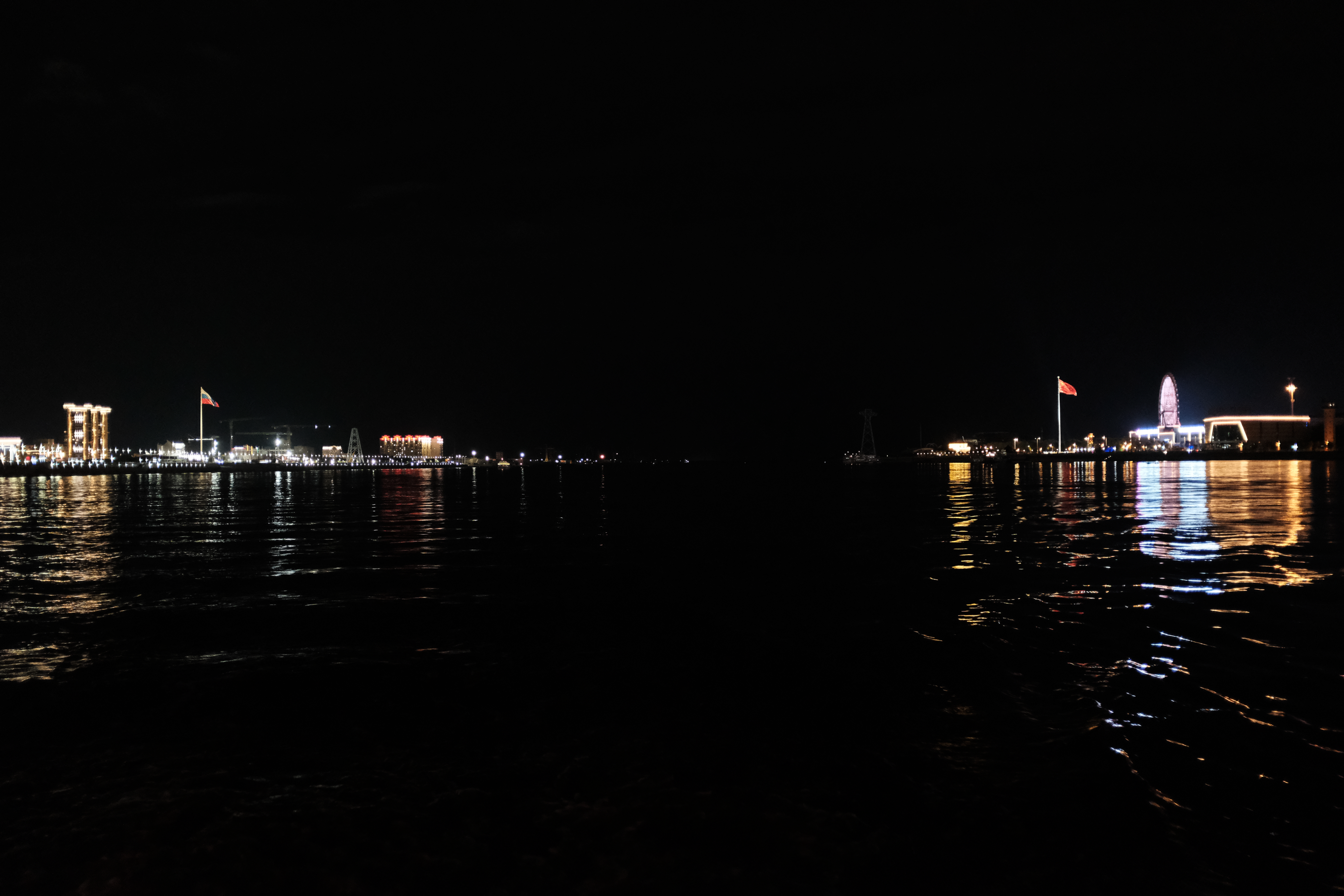
Monday 5 August — Journey to Heihe
Last night, my train was cancelled. Bad weather. BC and I rented two different rooms in a nearby hotel. We leave in the middle of the day. We eat in a kind of self-service restaurant, and the food is excellent.
I give him cash, and he transfers money to my WeChat balance. Without a national bank card, it is impossible to transfer money to another person from a foreign bank account. But it seems possible to open a Chinese bank account with a passport.
We check train departure times. He goes to the West station, while I go to the East. To do this, I use the Trip.com app. I cannot find the information. I then use the 12306 app, which is the original Chinese version of Trip.com. I use 12306, the English version, and I still cannot find the information I am looking for. BC tells me to use the app in its Chinese version, then use a translator to navigate the site. That is where I find the information I am looking for. Moral: Chinese apps are only partially translated into English, and one cannot access all the available information until one switches to Chinese.
We buy snacks in a supermarket. It is the first time I set foot in this kind of place in China, because I have been living in luxury, fed by the hotel, restaurants or delivered dishes (ordered by friends, so I do not even know yet how to do it). We arrive at the checkout. I imitate BC. I pay by showing a QR code (linked to my WeChat wallet) on my phone screen, to a scanner. Beep! Done. Easy. Goodbye.
A few moments later, I shake BC's hand before the city swallows him through the sliding doors of the bus. I am now "alone in China".
I have time before my train to Heihe. So I take a bus to get to the station. I get there, but I cannot pay. It is also done through a QR code system. But not the one directly linked to my WeChat wallet. It must be linked to a virtual transport card. Many people on the bus with me have the physical version. Anyway, I enjoy the "stupid foreigner privilege" and the bus driver signals me to get on, after a minute of exchanging awkward smiles and unsuccessful attempts to understand at least one word of each other.
I use Baidu Maps to get around the city, by public transport.
I take a break in a park to deal with this virtual transport card QR code problem. In this park, people are between 2 and 80 years old. Some play ping-pong quite seriously, others sing karaoke, others do exercises, even elderly people, and children slide down elephant-shaped slides.
I order a taxi for the first time from the Baidu Maps app. Very friendly at first, but when we arrive at the station, he loses his good mood. He still takes my luggage out of his trunk and hands it to me politely. He drives off. I look at my phone to confirm the transaction. While I am doing this, a guy approaches and starts talking nonsense, waving his hands with an angry face. I just stand there looking at him with "fuck off" eyes. When he is done, I confirm the transaction. I suppose this guy was a friend of the taxi driver, who was worried that I would not pay the fare. China, just give me a second, I am doing my best.
Entering Harbin East Station. You need a card to get in, and I think it is the Chinese ID card, which I do not have (and never will since it is impossible to obtain Chinese nationality for foreigners). I show my phone screen to the door guard, and I go through. I have a few hours. The hall is crowded. I sit against a wall and write.
Time to go. Everyone spontaneously queues up when the sign indicates it. And quickly. From the outside, it looks orderly. Once in the queue, one is easily overtaken if one does not quickly close the gap with the person in front.
I have a ticket without a seat for this train. So I stand in the aisle, shoulder to shoulder with other people who have not paid for a seat. All the seats and berths are taken. I will stay standing for a few hours only. The standing people get off at the third or fourth stop. Then I am allowed to take a free seat.
Tuesday 6 August — Crossing to Russia
I sleep on the train. I get off the train. I take a bus to Heihe. Then I go to the banks of the Amur River, called the Black Dragon River by the Chinese. Hello again, Blagoveshchensk.
I ask friends for help to locate the Sino-Russian customs. I go there on foot. When I finally arrive, everything goes well. There is a first queue. Then, X-ray gates for luggage. Then, the passport counter. Surprised to see a French passport, the agent swivels in his chair to attract the attention of all his colleagues. He brings over a lady who speaks English. She asks me where my visa for China is. I say I do not need one. "What?" she says, smiling. I explain that for less than 15 days, French people do not need one until the end of 2025. She leaves and comes back asking me for a paper version of my Russian e-visa. I calmly explain that I agree to do it, leave the queue, print the paper somewhere nearby and come back, but I also say that when I received the e-visa, it was written that I did not need a paper version, because scanning the screen also works. She leaves and comes back to tell me that I am allowed to pass. I arrive in another hall, where I have to buy a boat ticket. I do it, and I pay in cash 75 yuan. Then I queue until the doors open to get on the boat.
I get on the boat. I help a Chinese lady with her luggage, and she thanks me in Russian, saying that Russians are kind, probably thinking that I am Russian.
Crossing the border by boat. 10 minutes. The two cable car pylons are in place. The Russian one is missing a few pieces on top. The cables are not there yet.
Russian customs. Today, no visa is needed to enter. Local decision. I fill in a migration card. A Chinese lady (I suppose) and a Russian man with a yellow collar pass by, chat over the counters. They cross lines that others do not cross, as if they were used to this situation, and to the staff who know them. I am now allowed to enter Russia.
Chinese groups wait outside. I go to the hotel, I know the way. I find the same administrator as last time. I pay in cash for my stay. 14 nights.
After a break, I meet a friend from last time, who speaks French.
Wednesday 7 August — Back in Blagoveshchensk
Rest at the hostel. I use my Russian SIM card. Laundry and shopping. The Russian bank card seems to work normally. Work/writing/research.
Later, I meet a local journalist friend, and a local artist from my first stay. We go to a bar. Time has passed, personalities and goals have changed a bit. Later, I meet a local musician who studied French at the neighbouring БГПУ university.
Thursday 8 August — Work and news
Breakfast with творог. In the kitchen, I meet three guys who work on the cable car construction site. Happy coincidence.
I rest for the rest of the day, browsing local news, trying to find events involving Russia-China relations. A gastronomic event called Берега вкуса will take place soon, but I will miss it, because I will be in Russia when it is celebrated in China, and vice versa.
Site code update.
Friday 9 August — Library and news
Reading the news. I try to put the site online. But access to my server is blocked. I try a VPN, and the hostel Wi-Fi, without success.
Heading to the library, on Lenin Street.
I learn from the Institute of Ethnology and Anthropology of the Russian Academy of Sciences that today is the International Day of the World's Indigenous Peoples. I am very interested in the methodology they use for their "ethnographic expeditions" like this one for example.
Reading "The Urban Knowledge of the Anthropologist" (Agier, 1996).
I manage to put the site online, via the web interface of my web host.
I meet a French-speaking friend near the new fountain on Lenin Square.
It is the authorities that grant access to historical archives.
Recently, Ukrainian troops made an incursion onto Russian soil.
Saturday 10 August — Research
Heading to the library and the bank. I see an advertisement for the International Festival "Russian-Chinese Culture and Art Fair". I missed it.
At the library, I discover the ArchEthno project.
I work on an article about my master's thesis. I digress and come across articles about humour, by Nicolai Zlobin, Christie Davies (2007), and Amandine Regamey (2001). Which makes me think of these stand-up comedy events taking place in Blago.
On VK, a public group linked to the university shares information about Russian-Chinese relations and prospects.
Sunday 11 August — Cultural evening
I ask one of the workers who lives at the hostel and works on the cable car construction site a few questions, without a translator. It is brief.
I go to the Mad Tea Party screening. I meet friends from my first stay in Blago. Then I go to На месте for an exhibition. I meet people, mainly artists, then I get on a boat that goes back and forth on the Amur/Black Dragon River.